Toxic shock syndrome
Toxin-mediated shock with a diffuse red rash - recognise it at the front door, because the rash is subtle and the shock is not.
Red flags
- Fever plus hypotension plus a diffuse erythema - treat as toxic shock now
- Severe pain at a soft tissue focus - look for necrotising infection, which is a surgical emergency in its own right
- Any retained foreign body: tampon, nasal pack, wound packing - remove it
- Rapidly rising lactate or falling platelets
Recognise
Diffuse blanching macular erythema like sunburn, including the palms and soles, in a shocked and febrile patient, with later desquamation.
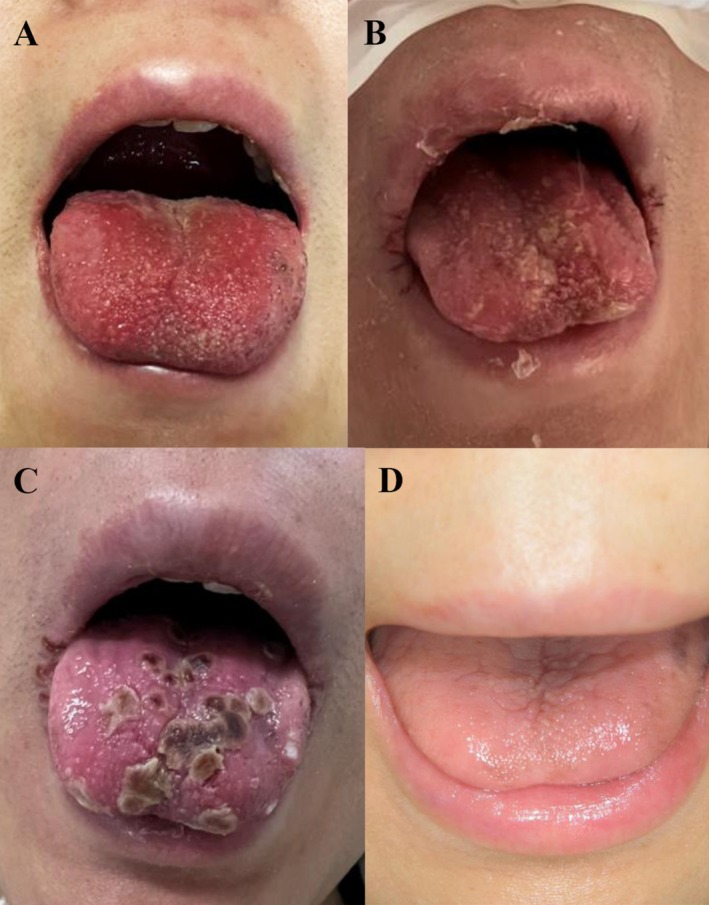
A diffuse blanching erythema is one of the easiest signs to miss entirely in brown and black skin, and its absence is not evidence against the diagnosis. Examine the palms and soles, where involvement is characteristic and pigment interferes least, and check the conjunctivae and oral mucosa for the hyperaemia that often accompanies it. The later desquamation of the palms and soles is tone-independent and may be the first thing anyone notices - but it arrives far too late to be useful in the ED. Diagnose this on physiology, not on colour.
- Fever with hypotension and a diffuse rash - the triad that should trigger the thought
- Rapid onset and rapid deterioration
- Multi-organ involvement: vomiting and diarrhoea, myalgia, renal impairment, deranged liver function, thrombocytopenia, confusion
- Mucosal hyperaemia - conjunctival injection, strawberry tongue
- Look for a source: tampon, nasal packing, a surgical or burn wound, a skin or soft tissue infection, or recent varicella in a child
- Streptococcal TSS is frequently accompanied by necrotising soft tissue infection and is more likely to be severely painful at a focus
Distribution
Photographs
Mimics
- Meningococcal septicaemia and purpura fulminans — Both are febrile shock with a rash; meningococcal purpura does not blanch, TSS erythema does
- Necrotising fasciitis and necrotising soft tissue infection — Not a mimic so much as a companion - streptococcal TSS and necrotising infection coexist often enough that finding one obliges you to look for the other
- Staphylococcal scalded skin syndrome — Both staphylococcal toxin diseases; SSSS blisters and shears, TSS shocks
- DRESS - drug reaction with eosinophilia and systemic symptoms — Both fever with widespread eruption; DRESS has weeks of latency and eosinophilia rather than shock
What to do in the ED
- Resuscitate for septic shock: fluids, cultures, lactate, and early critical care involvement
- Remove the source - take out the tampon, the nasal pack or the wound packing, and explore any wound
- Broad-spectrum intravenous antibiotics with anti-toxin cover per local policy, and consider the need for surgical source control
- Examine every soft tissue focus for disproportionate pain, because streptococcal TSS and necrotising fasciitis travel together
- Take FBC, clotting, renal and liver function, CK and lactate - the diagnosis rests on multi-organ involvement
- Discuss with infection services; notify public health for invasive group A streptococcal disease and arrange contact assessment
- Do not wait for desquamation - it appears one to two weeks later and is a retrospective sign
Disposition
Resuscitation area then critical care, with infection and surgical input as the source dictates.
Sources
- Atchade E et al. Toxic Shock Syndrome: A Literature Review. Antibiotics (Basel) 2024
- UKHSA - Invasive group A streptococcal disease: managing close contacts in community settings
- NICE NG51 - Suspected sepsis: recognition, diagnosis and early management
- Lim HW et al. International Expert Consensus on Knowledge Gaps in Care for Dermatologic Disorders in Skin of Color. Int J Dermatol 2026
- NICE CG153 1.2.1.5 - erythema may be underestimated in skin types V-VI (stated in the psoriasis guideline; cited here for that general point about assessing erythema, not for this condition)