DRESS - drug reaction with eosinophilia and systemic symptoms
A late, multi-organ drug reaction - the rash is the least dangerous part; the liver, kidney and heart are what kill.
Red flags
- Any widespread drug rash with fever - check FBC, liver and renal function before discharge
- Eosinophilia or transaminitis in a patient with a new rash
- A rash appearing weeks rather than days after a drug is started - the median latency in RegiSCAR was 22 days (IQR 17-31), so a drug history covering only the last few days will miss the culprit
- Chest pain, dyspnoea or hypotension - myocarditis is a recognised and lethal complication
Recognise
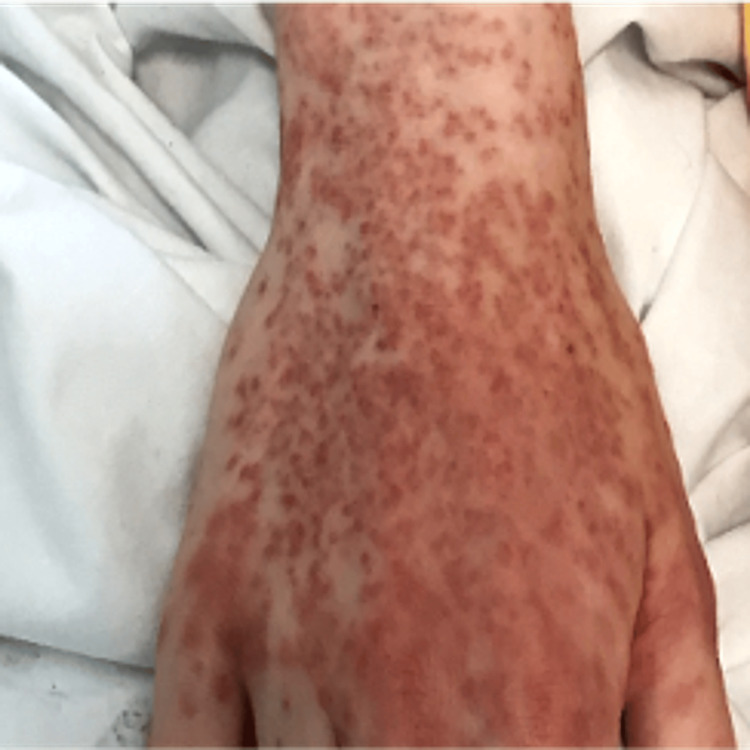
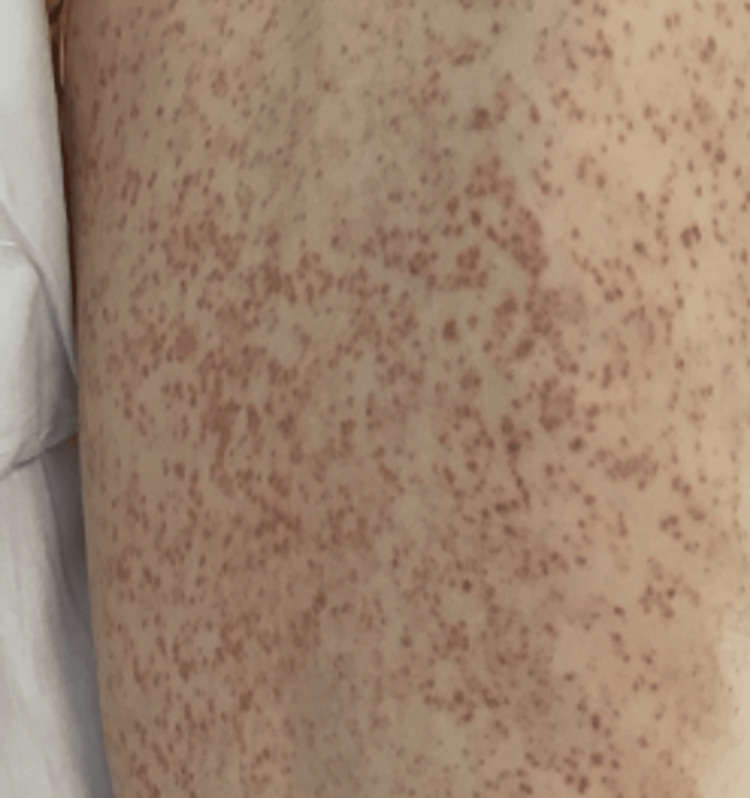
Widespread red morbilliform or urticarial-looking eruption becoming confluent, infiltrated and oedematous, with a swollen face and later desquamation.
Confluent erythema may be hard to appreciate and the eruption can read as generalised darkening or a violaceous, ashen change instead of redness. Facial oedema, skin infiltration that makes the surface feel thickened, and the tone-independent systemic features are the reliable signs. Post-inflammatory hyperpigmentation during resolution is more pronounced and more persistent, and should not be mistaken for ongoing active disease.
- Facial oedema - a hallmark, and unusual in a simple drug rash
- High fever and lymphadenopathy
- Eosinophilia, atypical lymphocytes, or deranged liver function on routine bloods
- A long latency: median 22 days after starting the drug in the prospective RegiSCAR series, far longer than most drug rashes
- Mild mucosal involvement may occur but severe erosions point to epidermal necrolysis instead
Distribution
Photographs
Mimics
- Stevens-Johnson syndrome / toxic epidermal necrolysis — Both severe drug reactions; epidermal necrolysis blisters and erodes mucosa, DRESS swells and involves organs
- Toxic shock syndrome — Both give fever and a widespread eruption; TSS is shocked and rapid, DRESS has a latency of weeks and eosinophilia
- Erythroderma — DRESS is a cause of erythroderma rather than a separate thing when it becomes confluent
What to do in the ED
- Stop the suspected drug immediately - and search back weeks, not days, because the latency is long
- Take FBC with differential, liver function, renal function, CRP and a urine dip: the diagnosis is made on bloods, not on the rash
- ECG and troponin if there is any cardiorespiratory symptom, because myocarditis can present late and is a leading cause of death
- Assess against the RegiSCAR criteria rather than diagnosing on impression
- Refer to dermatology and admit - this is not a rash to review in clinic
- Do not restart the culprit or a cross-reacting drug; document the reaction prominently in the allergy record
- Warn about the relapsing course: this reaction can flare weeks after the drug is stopped
Score
Disposition
Admit under medicine with dermatology input. Organ involvement dictates the level of care.
Sources
- Kardaun SH et al. Drug reaction with eosinophilia and systemic symptoms (DRESS): an original multisystem adverse drug reaction. Results from the prospective RegiSCAR study. Br J Dermatol 2013
- Lim HW et al. International Expert Consensus on Knowledge Gaps in Care for Dermatologic Disorders in Skin of Color. Int J Dermatol 2026
- NICE CG153 1.2.1.5 - erythema may be underestimated in skin types V-VI (stated in the psoriasis guideline; cited here for that general point about assessing erythema, not for this condition)