Angio-oedema - allergic, ACE-inhibitor and hereditary
Deep swelling that can obstruct an airway - and the mechanism matters, because adrenaline does not work on bradykinin.
Red flags
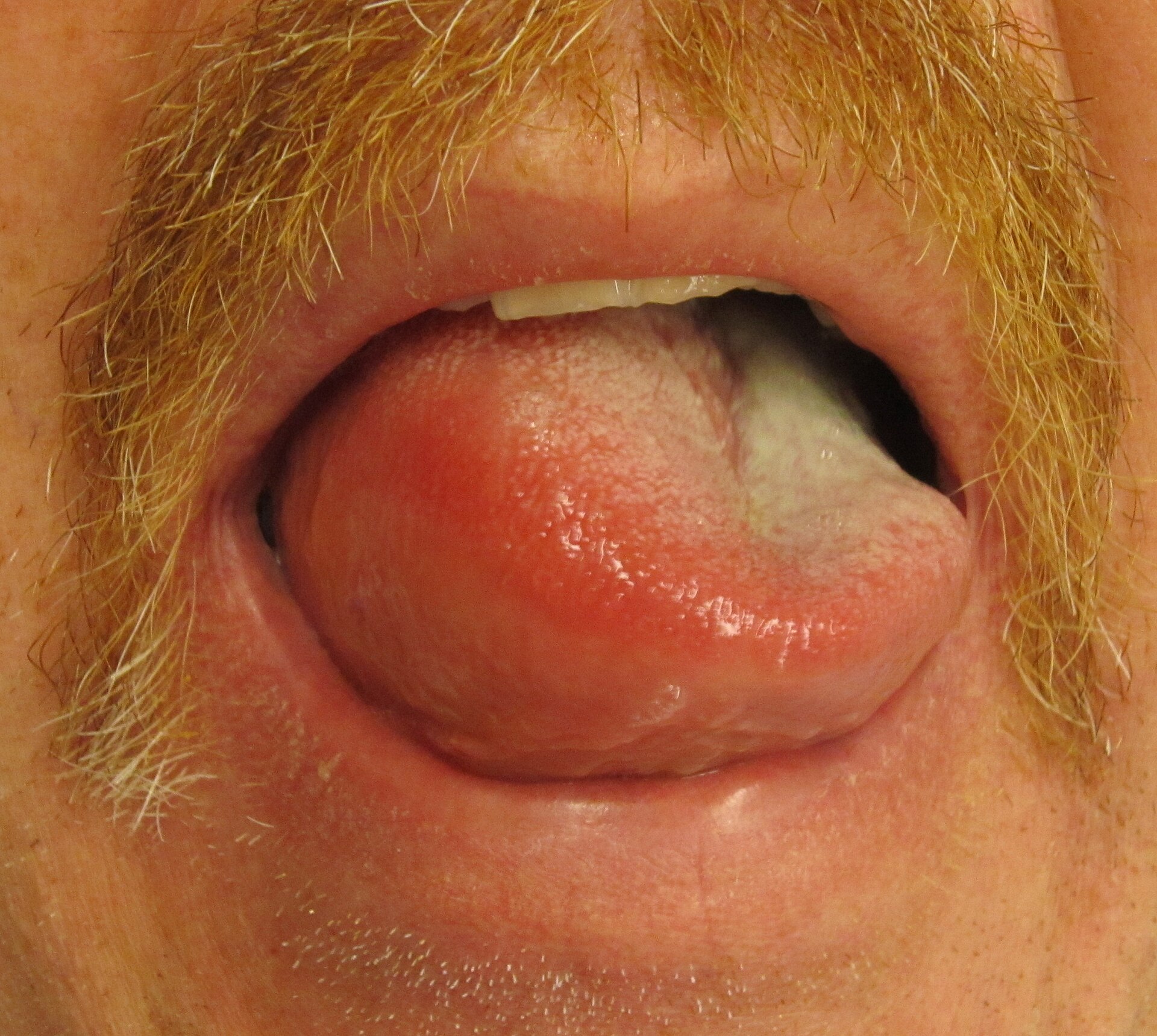
- Any voice change, stridor, drooling, dysphagia or tongue swelling - a threatened airway, call for anaesthetic and ENT help immediately
- Rapid progression of facial or oral swelling
- Hypotension, wheeze or urticaria with swelling - manage as anaphylaxis
- A known hereditary angio-oedema patient with any attack involving the face, neck or abdomen - give their specific treatment, and early
Recognise
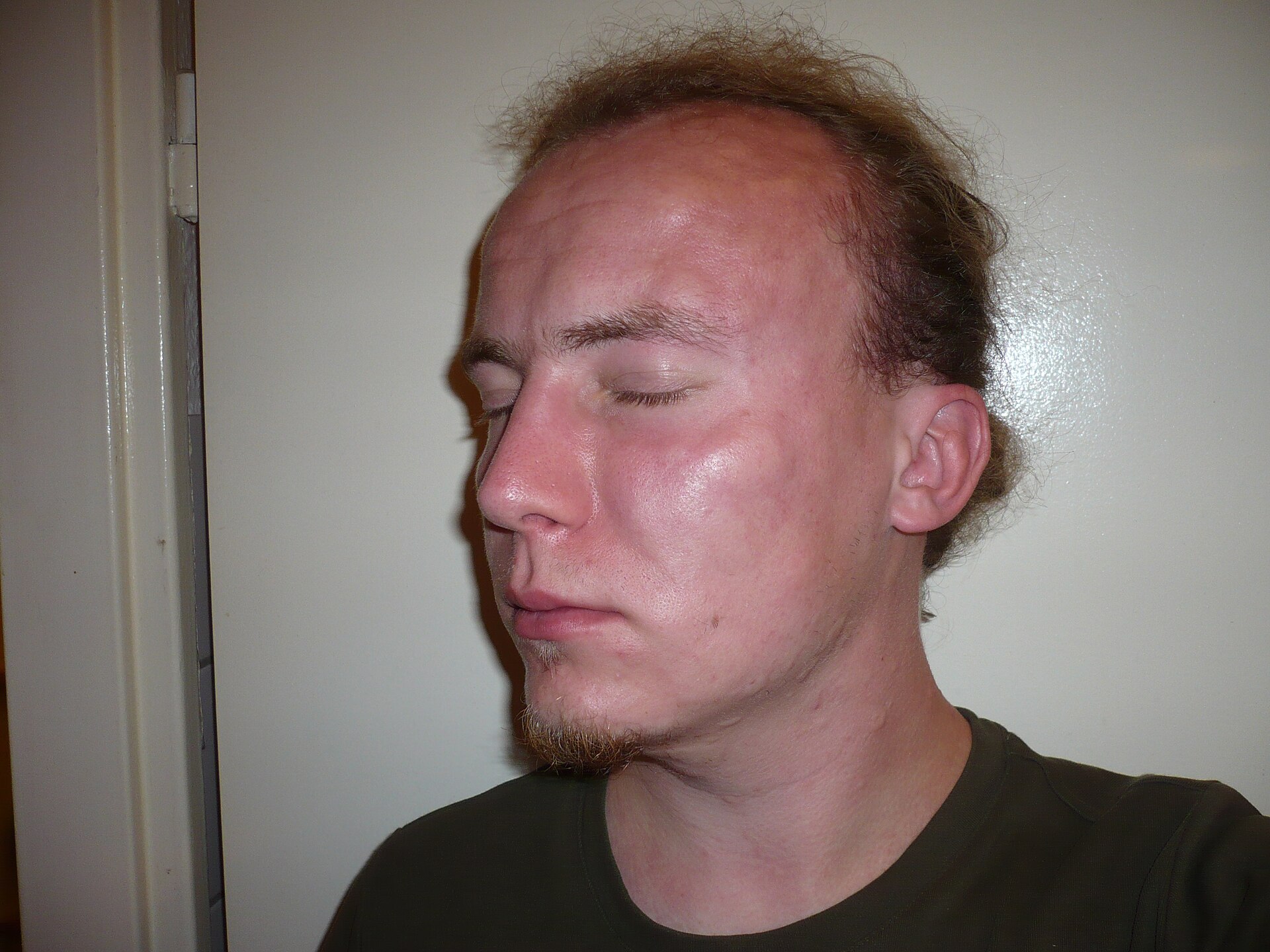
Non-pitting asymmetrical swelling, often with normal or slightly red overlying skin; where urticaria coexists, red raised weals appear alongside it.
The swelling is the diagnosis and it is tone-independent, so recognition is generally not the problem here. Accompanying urticaria is the part that is missed: weals in brown and black skin are often skin-coloured or paler than the surrounding skin rather than red, and are more easily felt than seen. Palpate for raised weals and ask about itch instead of looking for redness - because their presence or absence is precisely what separates a histamine-mediated from a bradykinin-mediated mechanism, and therefore what determines whether adrenaline will work.
- Deep, non-pitting, asymmetrical swelling rather than a surface rash
- Urticaria and itch present - suggests a histamine-mediated cause, which responds to adrenaline. Note what Resuscitation Council UK actually says: an antihistamine is reasonable for an allergic rash alone, but antihistamines are not recommended for treating airway, breathing or circulation problems in anaphylaxis, and steroids such as hydrocortisone are no longer recommended for its routine treatment
- Urticaria and itch absent - suspect bradykinin-mediated angio-oedema from an ACE inhibitor or hereditary angio-oedema, which responds poorly to adrenaline and needs specific treatment. This changes what you add, not whether you give adrenaline to a threatened airway
- Onset over hours rather than minutes, and a slower resolution over days, also point to bradykinin
- Ask directly about ACE inhibitors, including one taken uneventfully for years, because onset can be delayed by months
- Ask about previous episodes, a family history, and recurrent unexplained abdominal pain - all suggest hereditary angio-oedema
Distribution
Photographs
Mimics
- Erythroderma — Facial oedema with widespread erythema may be DRESS or erythroderma rather than isolated angio-oedema
- DRESS - drug reaction with eosinophilia and systemic symptoms — Facial oedema is a hallmark of DRESS; the difference is the fever, the systemic features and the eosinophilia
- Acute urticaria — Weals with the swelling point to a histamine-mediated mechanism; their absence points to bradykinin - so look for urticaria deliberately, and by palpation in brown and black skin
What to do in the ED
- Assess the airway first and repeatedly; involve anaesthetics and ENT early for any oral, tongue or laryngeal involvement
- Decide the mechanism: look and feel for urticaria, ask about itch, review the drug history for an ACE inhibitor, and ask about previous attacks and family history
- If there is any suggestion of anaphylaxis, give intramuscular adrenaline and manage per the Resuscitation Council UK anaphylaxis guideline - do not withhold it while deliberating mechanism
- For bradykinin-mediated angio-oedema, expect adrenaline to be of little or no benefit - but this is a reason to add specific treatment, never a reason to withhold adrenaline. The mechanism cannot be determined reliably at the bedside, and a threatened airway is treated as anaphylaxis until proven otherwise. Stop the ACE inhibitor permanently and never re-challenge
- For known or suspected hereditary angio-oedema, give the patient's specific therapy - a C1 inhibitor concentrate or icatibant - without delay, and discuss with immunology; take a C4 and C1 inhibitor level but do not wait for results
- Observe for a period appropriate to the mechanism and the site, because bradykinin-mediated swelling progresses over hours
- Document the mechanism and the culprit prominently, and refer to immunology or allergy for anything recurrent or unexplained
Disposition
Any airway involvement means resuscitation area with anaesthetic and ENT presence, then critical care. Isolated peripheral or lip swelling in a patient with a clear histamine-mediated cause and a secure airway may be observed and discharged with allergy follow-up.
Safety-netting
Local variation
Sources
- NICE CKS - Angio-oedema and anaphylaxis
- Resuscitation Council UK - Guidance: Anaphylaxis
- Maurer M et al. The international WAO/EAACI guideline for the management of hereditary angioedema - The 2021 revision and update. World Allergy Organ J 2022
- Lim HW et al. International Expert Consensus on Knowledge Gaps in Care for Dermatologic Disorders in Skin of Color. Int J Dermatol 2026
- NICE CG153 1.2.1.5 - erythema may be underestimated in skin types V-VI (stated in the psoriasis guideline; cited here for that general point about assessing erythema, not for this condition)